North Melbourne Heritage Review

Understanding North Melbourne's Heritage, Community and Evolving Identity

A Working-Class Suburb Shaped by Migration and Industry

Contact Featured

Recent searches

None yet available


Our Brief

After completing the Carlton Heritage Review in 2018, Lovell Chen again teamed up with Extent Heritage (specialist cultural heritage advisor), to undertake a heritage review of North Melbourne for the City of Melbourne, the first detailed review of the area since the early 1980s.  The study examined the existing heritage controls and identified new places for protection, with the preparation of a thematic environmental history and Traditional Owner engagement.

Details

Client

City of Melbourne

Date

2019

Status

Completed

Location

North Melbourne/Yern-da-ville

Traditional Owners

Wurundjeri Woi-wurrung people

Collaborators

Extent Heritage

Sector

Civic

Historical Chronology
Pre-Colonial Environment

The pre-colonial environment of North Melbourne was inhabited by the Woi-wurrung and Boon Wurrung speaking peoples of the Eastern Kulin Nation, on undulating lands to the north of the Yarra River and east of the West Melbourne Swamp and the salt water lagoon known as the ‘Blue Lake'.

The area now known as North Melbourne is believed to have been known by the Kulin name Yern-daville. Traditional owners are known to have camped and held gatherings in this broader area. A creek ran south-west through the area, from the high ground of what is now Royal Park, into what was the West Melbourne Swamp. This creek would have traversed plains and grassy woodland, alive with a range of birds, animals and plant species, providing Traditional Owners with a wide variety of natural resources.

Image An 1860s view of the study area from Royal Park, with North Melbourne in the foreground, the Blue Lake behind it and Port Phillip Bay in the background.
Source James Calder, artist, Deutscher and Hackett

Building North Melbourne

With land sales from the early 1850s, the residential and civic development in North Melbourne was influenced both by the official subdivision and the topography of the suburb. Bound by heavily trafficked main roads, the suburb is physically separate from other localities, giving it an almost ‘island’ and insular character. While the elevated Hotham Hill area retained relatively generous allotment sizes and developed with larger buildings, and the commercial and civic heart grew at the south of the suburb, the ‘valley’ in the centre was where more modest housing was located.

In the interwar period North Melbourne became a target of the Housing Commission of Victoria’s ‘slum clearance’ efforts. Melbourne’s first slum reclamation area was declared in the suburb in 1940, with housing estates and high-rise towers constructed through the mid-twentieth century. A large area of the suburb was given over to the pioneering ‘own-your-own’ developments, a partnership between the HCV, Master Builders Association, A V Jennings and a panel of architects.

Image View of Queensberry Street, North Melbourne, c. 1875 (detail)
Source American & Australasian Photographic Company, FL1252618, State Library of New South Wales

Peopling North Melbourne

The population of North Melbourne grew quickly through the 1850s and 1860s, buoyed by the gold rush period. By 1861, North Melbourne had a population of over 7,000, with the majority of residents and business owners having a British (particularly Scottish) background. The suburb was also said to be the ‘most Irish locality’ in Melbourne. The demographics of the suburb slowly diversified through the early twentieth century, with the arrival of residents and business owners from Mediterranean Europe and China. The effects of Australia’s post-war and late twentieth century migration schemes have seen further diversification of North Melbourne’s resident population. New community places of the 1960s reflected this, including the construction of the Ss Peter and Paul Ukrainian Cathedral and the opening of the Lithuanian Club. From the late twentieth century, North Melbourne began a process of gentrification, consistent with a broader trend in the traditional working-class suburbs of Melbourne.

Image Irish Catholic gathering, North Melbourne, c. 1900s
Source City of Melbourne Libraries

North Melbourne's Industries & Workforce

For a predominantly residential suburb, North Melbourne has developed with a number of pockets of warehouses, small factories and other light industrial buildings. North Melbourne was identified in 1909 as an ‘important manufacturing centre’, including saw mills, glass works, factories and industrial complexes. In the nineteenth century, the working population of North Melbourne was diverse, comprising people employed in industry, retail and professional occupations. However, the vast majority of workers in the suburb were employed in trades or manual occupations, many of whom were impacted by the economic crash of the 1890s. Women-owned or operated businesses in North Melbourne were not uncommon during the nineteenth century, including hospitality, hotels, and clothing outlets. Suffragist and feminist Brettena Smyth took over her late husband’s greengrocery in Errol Street, developing the business to a fancy repository, milliners and drapery.

Image Hotham Saw Mills, Victoria Street, 1875 (detail)
Source American & Australasian Photographic Company, FL1249174, State Library of New South Wales

Governing North Melbourne

North Melbourne was an independent municipality for 45 years, which had a significant influence on the character of the suburb. The Borough of Hotham was proclaimed in 1859, and was the smallest of the new municipalities. The first town hall was constructed on an elevated site at the corner of Queensberry and Errol streets in 1862-63, and was replaced in 1875-76 by the present complex designed by architect George Johnson. In 1905, the Town of North Melbourne was incorporated back into the City of Melbourne.

Both police and court services were initially accommodated within the new town hall. In the late nineteenth century, crime became concerning issue, often exacerbated by alcohol, and the effect the economic downtown of the 1890s had on a predominately working-class community. Larrikinism, a term used to describe a defiance of authorities and other crimes by young men in groups (or 'pushes) was regularly reported upon. One local ‘push’ that gained particular notoriety was the ‘Crutchies’, so named due to the use of crutches as weapons.

Image North Melbourne Town Hall, corner Errol and Queensberry streets, c. 1967 
Source Education Department, VPRS 14517/P144 R657, Public Record Office Victoria

Connecting North Melbourne

North Melbourne is bounded by two main thoroughfares from the city: Flemington Road and Victoria Street, physically separating it from nearby suburbs. Flemington Road evolved from an 1840s track, becoming a major stock route to the Newmarket livestock saleyards. The suburb’s southern boundary, Victoria Street, developed as a predominately commercial street. The siting of the Melbourne Benevolent Asylum (opened 1850) at its western end prevented it becoming a major thoroughfare. The suburban streets in North Melbourne were generally surveyed on a straight, grid-like pattern with characteristic wide streets, many of which were planted with street trees in central medians.
Public transport in the suburb commenced with horse-drawn omnibus services from the early 1870s. The omnibuses were superseded by cable trams, with the North Melbourne tramway opened in 1890. The route was electrified in 1935, and the present West Maribyrnong no. 57 tramline follows this earlier route through North Melbourne.

Image Aerial view over North Melbourne, with Flemington Bridge Railway Station, c. 1950s
Source Airspy, H2016.33/97, State Library Victoria

Community Life

Religion is an important historical theme in North Melbourne, shaping the built form of the suburb. Numerous reserves were made for use by religious denominations in the government subdivision, including for the Church of England, Wesleyan Church, Presbyterian Church and Catholic Church.
Social welfare and charitable institutions in North Melbourne have been significant over its history. The first permanent building in North Melbourne was also its first welfare place - the Benevolent Asylum of 1850-51. Other charities have established a significant presence, indicative of the need and ever-present vulnerability of the population.

Numerous schools have operated throughout North Melbourne, including government and religious schools. The substantial North Melbourne Primary School was constructed in 1874, soon after the passing of the Education Act. The North Melbourne Creche in Howard Street was an early, purpose-built childcare centre in Melbourne, reflecting the relatively high proportion of working women in the suburb.

Image Group of children in Erskine Place, c. 1935
Source F Oswald Barnett Collection, H2001.291/61, State Library Victoria

Shaping North Melbourne's Political, Cultural & Creative Life

The community of North Melbourne has historically been politically engaged. This engagement is seen in the early moves to establish control of the suburb as a distinct municipality; the activities of local residents as representatives on the Hotham council; the agitation of women and workers of North Melbourne for better conditions; and, in the twentieth century, the formation of community groups engaged in a discourse around how the suburb should develop.

Sporting activities and other recreation in North Melbourne historically have been concentrated to the south-west, at the Arden Street reserve. This has long been the home of the North Melbourne football and cricket clubs, and remains the home of the AFL club, the North Melbourne Kangaroos, colloquially known as the ‘shinboners’, believed to be a reference to the local abattoir workers.

Hotels were important gathering places in North Melbourne, and numerous hotels were constructed through the suburb from the mid-nineteenth century. Many houses were small, and did not afford residents space for socialising, gathering or relaxing; in this context hotels provided an essential neighbourhood service and most often drew patronage from their immediate local area. As part of the nineteenth century development of North Melbourne, a number of venues were used for performance and entertainment, although the suburb has never had a main entertainment centre. The suburb had two cinemas in the twentieth century – the Imperial Picture Theatre (1913) and the Central Theatre (1942), now the Lithuanian Club. 

Image North Melbourne Seconds football team in front of the grandstand at the Arden Street oval, 1947
Source Charles Boyles, photographer, H2008.122/172, State Library of Victoria

Our Response

The expansive North & West Melbourne heritage precinct (HO3) has been in place since the 1980s, and acknowledged the importance of the suburb’s nineteenth century buildings. This review considered the whole of the study area, including existing HO places and potential new heritage places. A thematic history was prepared, and engagement with Traditional Owner organisations.

As an outcome of our research and analysis, six new places have been added to the heritage overlay, in recognition of the diversity of development in North Melbourne, beyond its nineteenth century buildings. The suburb underwent substantial change in the mid-twentieth century, prompted by the work of the slum clearance movement and the Housing Commission of Victoria (HCV). Hotham Gardens, a medium density residential development, was undertaken by the Master Builders (Associated) Redevelopment Ltd, a panel of prominent Melbourne architects and the HCV (Stage 1, 1959-61). The distinctive Ss Peter and Paul Ukrainian Catholic Cathedral (1962-3) is a substantial post-war church building by Salvador Camacho Bracero of Smith & Tracey for a growing post-war migrant community, and is a local landmark on Hotham Hill. The modestly scaled Wes Lofts office building of 1971-1972, is an important work by the architects Eggleston MacDonald and Secomb, with a sculptural facade treatment in a simple Brutalist style.

The new HOs also included the Harris Street Plane Tree Avenue, an avenue planting of London Plane trees (Platanus x acerifolia) established in 1905 by the then City of North Melbourne.

Additions to the Heritage Overlay

Hotham Gardens

Harris Street Plane Tree Avenue

Wes Lofts & Co Office

Ss Peter and Paul Ukrainian Catholic Cathedral

Albion Hotel

Meet the Team

Kate Gray
Director

kgray@lovellchen.com.au | 0421 945 334Contact Kate Gray

Michael Cook
Associate Principal

mcook@lovellchen.com.au | 0421 197 960Contact Michael Cook

Libby Blamey
Senior Associate


295 Queen Street (Former Records Office)

As conservation works at Melbourne's Former Records Office near completion, restored façades are emerging and the building's iconic griffin sculptures are being carefully reinstated

Billilla Mansion Sculpture Biennale 2026

Billilla Homestead alive with community and culture during the Melbourne Sculpture Biennale, highlighting the importance of accessibility and amenity improvements for future generations

A visit to the ICS Lab

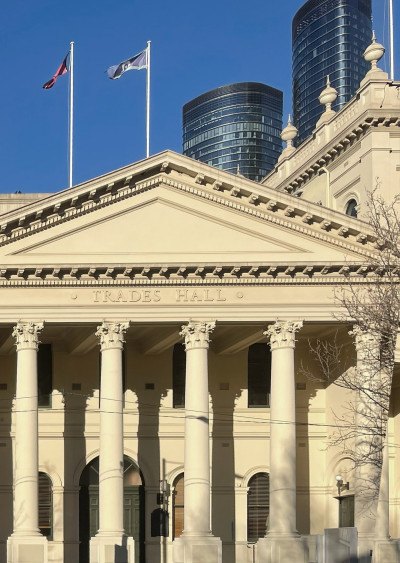
Our team visited the International Conservation Services Lab, gaining insight into heritage conservation techniques and reconnecting with collaborators on the Trades Hall Honour Boards project

Dinner at University House

13 staff travelled to Canberra to celebrate the restoration of University House

Chimney Investigations at the Former Records Office Victoria

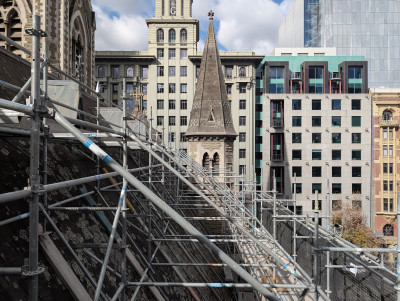
Will and Olivia were scoping chimneys at Melbourne's former Records Office, a landmark built in 1900-04 to protect Victoria's vital records, as part of ongoing conservation works

Happy 80th Anniversary ANU

Celebrating ANU’s 80th anniversary and the reopening of University House, Lovell Chen proudly delivered conservation-led design and heritage services, preserving its character for future generations.

Current scope of works approaching completion at Werribee Park Mansion

Lovell Chen has been providing conservation and heritage services to the mansion since the 1970s and we are proud to continue our association with the site

At-height assessments at the University of Melbourne

Zoe, Will, and Max are undertaking inspections at the Parkville Campus as part of the University's annual audit program to guide the planning for building conservation, maintenance and capital works

Scots' Church Melbourne

Lovell Chen is leading roof and façade restoration works on historic Scots' Church Melbourne, repairing timber structures, stonework, and slate roofing to preserve the 1874 landmark

PIA Victoria Summit at Wesley Place Precinct

Kate introduced PIA VIC Emerging Planners to the opportunities available when choosing to integrate heritage conservation with contemporary city development.

Staff visit the Royal Historical Society of Victoria

RHSV staff took us through the Former Army Medical Corps Drill Hall

Libby wins Professional Historians Australia essay prize

Congratulations to Senior Associate Libby Blamey – winner of best peer-reviewed article by Professional Historians Australia!

Trades Hall Stage 3 Opening

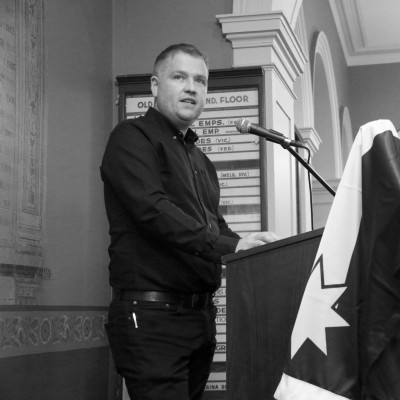
Associate Principal Stuart Hanafin spoke at the Trades Hall opening, highlighting the restoration of century‑concealed honour boards and celebrating the building’s enduring union heritage.

'Making a Heritage Building Modern' tour

How do you put modern services into a building that has handmade nails holding the floors together?

Lovell Chen authored guide launches in Queensland

As lead author of QHeritage: Designing with Heritage Places, Director Adam Mornement attended Brisbane Open House's launch event.

Lovell Chen Trivia Night, 2026 edition

hecklers, recounts and a very close contest

'ADAPT!' to launch with MDW 2026 panel

Suzanne will discuss best practice in the adaptation and reuse of historic buildings at the former Collingwood Tech complex – also home to our tailor-made facility for Circus Oz