Carlton Heritage Review

Reassessing Heritage Significance Across One of Melbourne's Most Historic Suburbs

Research, Survey and Heritage Assessment

Contact Featured

Recent searches

None yet available


Our Brief

Lovell Chen, with Extent Heritage (specialist cultural heritage advisor), was engaged by the City of Melbourne to undertake a heritage study of Carlton, covering the area east of Swanston Street. It was the first in-depth review of the study area since the 1990s. The study examined the existing heritage controls and identified new places for protection, with the preparation of a thematic environmental history and Traditional Owner engagement.

Details

Client

City of Melbourne

Date

2018-2019

Status

Completed

Location

Carlton/Naarm

Traditional Owners

Wurundjeri Woi-wurrung people

Collaborators

Extent Heritage

Sector

Civic

Historical Chronology
Pre-contact Environment

The pre-contact environment of Carlton was first inhabited by the Woi-wurrung peoples of the Kulin Nation, on alluvial lands to the north of the Yarra River. Aboriginal people have always lived in close interaction with Country, and sustainably cared for and used the land, living in harmony with the environment.

In the pre-contact period, the Carlton Heritage Review study area was characterised by lightly wooded grassy plains with a mix of eucalypts and she-oaks, dipping around the point where the intersection of Victoria and Swanston streets stands today, and where a swampy section marked the start of what became known as the Elizabeth Street creek. The nearby presence of scarred trees at Melbourne Zoo and Princes Park further suggest a strong and vital pre-contact Aboriginal presence in the area.

Image Robert Russell survey map showing wooded landscape to the north of Melbourne, 1837
Source Robert Russell, surveyor, State Library Victoria

Building Carlton

Carlton was developed as part of the extension of Melbourne to its north in the mid-nineteenth century. The first sales of allotments south of Grattan Street took place in the early 1850s, with the northern part of the suburb, to Princes Street, subdivided in the 1860s. Numerous small buildings were constructed in Carlton in the early period of its development, many of which were one or two room timber cottages or shops. These buildings were mostly replaced throughout the later nineteenth century with more substantial and permanent brick and stone dwellings.

By the late nineteenth century, some distinction had emerged between development in the north and south of Carlton, with grand terrace rows on the main streets to the south, and smaller workers cottages to the north, and in narrow rights-of-way. Concurrent with this development was the construction of hotels in the suburb, which numbered approximately 80 by 1873. The rapid development of the nineteenth century, which had included construction of tiny cottages in rear lanes, became the focus of the so-called ‘slum clearance’ movement from the interwar period. Cleared housing was replaced by the multi-storey ‘Housing Commission towers’, which in turn began to dominate the skyline in parts of the suburb.

Image View of Carlton between Queensberry and Victoria streets in 1870, looking east past Cardigan Street towards Carlton Gardens, 1870
Source Charles Nettleton, photographer, H96.160/1433, State Library of Victoria

Peopling Carlton

Carlton was known for its working-class population for much of its history, with many residents engaged in the building trades. In the nineteenth century, the suburb followed the city’s immigration patterns, with its residents predominantly from Britain and Ireland.

Carlton’s population diversified from the late nineteenth century. The suburb attracted large numbers of Jewish people from Europe and by the 1920s, it was known as a centre of Jewish Melbourne, retaining this status until the mid-twentieth century. Its most well-known post-war migrant group is the Italian community – 25% of the suburb’s population by 1960. Other Mediterranean migrants, such as Greek, Spanish and Lebanese people, as well as arrivals from South America, China and Vietnam came to Carlton. Reflective of the multicultural character of Carlton is the former Wesleyan Methodist Church, of 1869-70, which became the Church of All Nations in the 1960s. The 1960s also signalled the beginning of Carlton’s gentrification, a process that continues to this day. Instigated by students, academics and ‘trendies’ who were attracted by the suburb’s ‘cosmopolitan’ character.

Image Members of the Russo family in front of their house in Carlton, c. 1945
Source Russo Family Collection, H2009.17/11, State Library of Victoria

Building Carlton's Industries & Workforce

The suburb is known for the vibrant retail strip along Lygon Street, but in the nineteenth century, small centres developed servicing the surrounding houses. Along with small shops, including grocers and bootmakers, were bigger enterprises such as King & Godfree and Ball & Welch. In the twentieth century, many businesses became important in maintaining a connection to culture and community. By the 1970s, Lygon Street was well established with Italian restaurants, drawing people from across Melbourne. Carlton residents also socialised in local hotels, halls and cinemas.

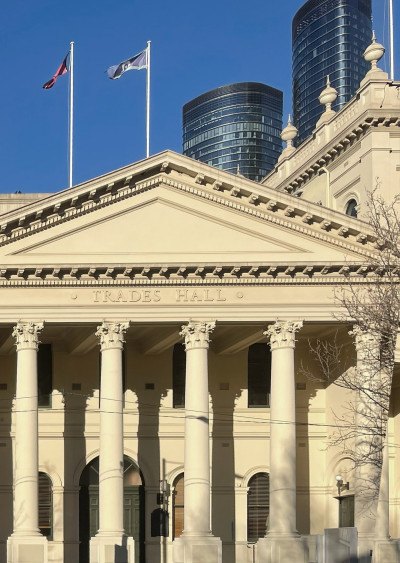
Industrial development in Carlton was generally small-scale, with larger factory complexes, such as Carlton Brewery and textile manufacturers, Davies Coop, located in the western parts of the suburb. Carlton’s working-class population had strong connections with the labour movement, notably the Victorian Trades Hall at the south of the suburb, with other union-related places located in close proximity.  

Image Looking east along Faraday Street, c. 1870s, with Lygon Street crossing in the foreground. King & Godfree’s premises is at left, then a tea merchants’ shop
Source American & Australasian Photographic Company, FL1250690, Mitchell Library, State Library of New South Wales

Governing Carlton

Crime in Carlton was a long running issue, reaching a peak in the 1890s, likely connected with the economic crash of the period. Larrikins were a particular ‘nuisance’, often gathering in large groups, known as ‘pushes’, which were highly localised and territorial. The most notorious criminal operating in Carlton in the early twentieth century was Squizzy Taylor, a key figure in organised crime in Melbourne. The 1887 Carlton Court House was the site of many criminal trials, including for the suburb’s larrikins. Other government services in Carlton included the Carlton Police Station and the Carlton Post Office.

In the latter post-war period, a strong and active community developed, intent on saving and promoting Carlton’s heritage. The Carlton Association was established in 1969, and produced surveys of the suburb, arguing for retention of existing housing and the suburb’s historic streetscapes. The campaigns of the association contributed to the development of heritage protection of the inner suburbs.

Image Carlton Post Office, Elgin Street, c. 1917
Source H89.105/42, State Library Victoria

Building Carlton's Community

Carlton has a range of community places which have provided space for spiritual, health, welfare, educational and recreational activities. Churches and other religious buildings were important institutions, and enabled many migrant groups to maintain religious aspects of their culture in their new home. Education has long had an impact on the community and built form of Carlton, including tertiary institutions and schools. RMIT expanded into Carlton, with large red brick buildings constructed for a new technical college in the 1970s. Health and welfare are also important historical themes, with a particular focus on women and children. Within the suburb’s parks and gardens, numerous sporting activities have been available to Carlton residents, including football, bowling, tennis and croquet. The Moreton Bay fig trees in the Carlton Gardens became an important meeting place for the Aboriginal community. The Carlton Baths were opened in 1916 and continues to be an important recreation and fitness venue in the suburb.

Image Children at Carlton State School, 1947
Source Argus Newspaper Collection, H2002.199/1067, State Library Victoria

Shaping Carlton's Cultural & Creative Life

The twentieth century demographics of Carlton – its ‘bohemian character and ethnic diversity’ - contributed to a flourishing arts, theatre and literary scene in the suburb from the 1950s. The political engagement of Carlton’s residents, students and academics contributed to the cultivation of a theatre scene that garnered a reputation for being boundary pushing. The La Mama Theatre and the Pram Factory are synonymous with this scene. Australia's first all-Aboriginal acting company, Nindethana (or ‘Ours’) was founded by Jack Charles, Joyce Johnson and Bob Maza at the Pram Factory in 1971. The 1970s also fostered a strong rock music scene in Carlton, along with other inner suburbs of Melbourne, one that was characterised by ‘powerful sense of identity and feistiness’.

Image The Pram Factory, Drummond Street, 1982
Source J T Collins Collection, H94.200/7, State Library of Victoria

Additions to the heritage protection

RMIT Building 94

Cardigan House Carpark

Earth Sciences Building (McCoy Building)

RMIT Building 71

Cross Street Co-operative Housing

Office building

Post-modern Terrace Row

Ministry of Housing Infill Housing

RMIT Buildings 51, 56 and 57

Meet the Team

Kate Gray
Director

kgray@lovellchen.com.au | 0421 945 334Contact Kate Gray

Michael Cook
Associate Principal

mcook@lovellchen.com.au | 0421 197 960Contact Michael Cook

Libby Blamey
Senior Associate


295 Queen Street (Former Records Office)

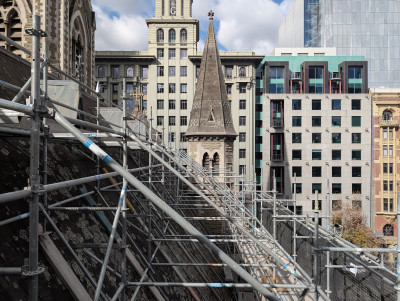
As conservation works at Melbourne's Former Records Office near completion, restored façades are emerging and the building's iconic griffin sculptures are being carefully reinstated

Billilla Mansion Sculpture Biennale 2026

Billilla Homestead alive with community and culture during the Melbourne Sculpture Biennale, highlighting the importance of accessibility and amenity improvements for future generations

A visit to the ICS Lab

Our team visited the International Conservation Services Lab, gaining insight into heritage conservation techniques and reconnecting with collaborators on the Trades Hall Honour Boards project

Dinner at University House

13 staff travelled to Canberra to celebrate the restoration of University House

Chimney Investigations at the Former Records Office Victoria

Will and Olivia were scoping chimneys at Melbourne's former Records Office, a landmark built in 1900-04 to protect Victoria's vital records, as part of ongoing conservation works

Happy 80th Anniversary ANU

Celebrating ANU’s 80th anniversary and the reopening of University House, Lovell Chen proudly delivered conservation-led design and heritage services, preserving its character for future generations.

Current scope of works approaching completion at Werribee Park Mansion

Lovell Chen has been providing conservation and heritage services to the mansion since the 1970s and we are proud to continue our association with the site

At-height assessments at the University of Melbourne

Zoe, Will, and Max are undertaking inspections at the Parkville Campus as part of the University's annual audit program to guide the planning for building conservation, maintenance and capital works

Scots' Church Melbourne

Lovell Chen is leading roof and façade restoration works on historic Scots' Church Melbourne, repairing timber structures, stonework, and slate roofing to preserve the 1874 landmark

PIA Victoria Summit at Wesley Place Precinct

Kate introduced PIA VIC Emerging Planners to the opportunities available when choosing to integrate heritage conservation with contemporary city development.

Staff visit the Royal Historical Society of Victoria

RHSV staff took us through the Former Army Medical Corps Drill Hall

Libby wins Professional Historians Australia essay prize

Congratulations to Senior Associate Libby Blamey – winner of best peer-reviewed article by Professional Historians Australia!

Trades Hall Stage 3 Opening

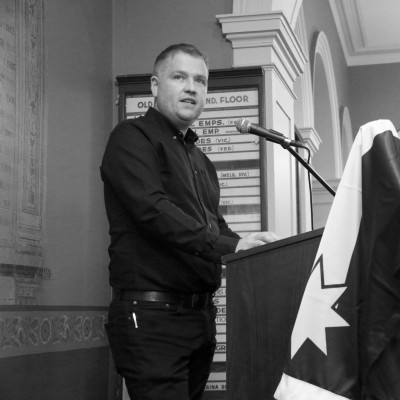
Associate Principal Stuart Hanafin spoke at the Trades Hall opening, highlighting the restoration of century‑concealed honour boards and celebrating the building’s enduring union heritage.

'Making a Heritage Building Modern' tour

How do you put modern services into a building that has handmade nails holding the floors together?

Lovell Chen authored guide launches in Queensland

As lead author of QHeritage: Designing with Heritage Places, Director Adam Mornement attended Brisbane Open House's launch event.

Lovell Chen Trivia Night, 2026 edition

hecklers, recounts and a very close contest

'ADAPT!' to launch with MDW 2026 panel

Suzanne will discuss best practice in the adaptation and reuse of historic buildings at the former Collingwood Tech complex – also home to our tailor-made facility for Circus Oz